Project
What exactly is being built, bought, financed, or operated—and why does the opportunity exist now?

Investorly performs independent research and due diligence on private placements for individual investors. We examine the people, documents, structure, economics, assumptions, assets, protections, and available evidence behind the opportunity before you commit capital.
Private-market access has expanded. The information, tools, and independent research available to individual investors haven’t kept pace.
Private markets now give individual investors access to businesses, real estate, private credit, energy, infrastructure, and other opportunities that were once much closer to institutional capital. We think that’s a good thing.
But access and understanding are not the same thing.
When an institution evaluates a private investment, it can draw on analysts, legal counsel, specialized data, research platforms, and third-party diligence. Individual investors are often making similarly consequential decisions with the sponsor’s materials, their existing advisers, and whatever questions they already know to ask.
That doesn’t mean the sponsor is wrong or the opportunity is bad. It means much of the responsibility for connecting the information, testing the assumptions, and identifying what still needs an answer falls on the investor.
Investorly was built to help close that gap—bringing independent research, structured due diligence, and plain-English analysis to private placements so individual investors can better understand what they’re being asked to invest in before committing capital.
Better access to private markets should come with better access to independent diligence.

Investorly researches the sponsor, offering documents, structure, economics, assumptions, assets, and available public information behind the opportunity.
We organize that work into a written DealIQ™ report so you can see what appears supported, what depends on assumptions, what remains unresolved, and what deserves follow-up before you make your own decision.
 Illustrative Sample
Independent Research Brief
Fictional opportunity · Not client findingsCross-CheckedEntity HistoryFormation dates and named principals compared across available records.
Open QuestionRealized OutcomesWhich prior loans are fully repaid, and how were recoveries treated?
Illustrative sample · Not client findingsYou will know the scope, required documents, price, and delivery date before the due diligence begins.
Tell us about the opportunity and your timing. We confirm fit and explain what comes next.
With the scope clear, complete the engagement and access your Investorly account.
Complete the intake and provide the offering materials needed for the agreed research scope.
Investorly examines the sponsor, documents, structure, economics, assumptions, and available evidence.
Your completed research is delivered through your written DealIQ™ report and Deal Vault.
Every review begins by asking what is being invested in, what the projected outcome depends on, what assets support the investment, and what protections exist if the plan doesn’t unfold as expected.
What exactly is being built, bought, financed, or operated—and why does the opportunity exist now?
What assumptions drive the projected returns, which ones matter most, and what changes when they move?
What does the investor actually own, finance, or have a claim against—and what supports the underlying value?
What legal, structural, contractual, collateral, governance, or economic protections exist if the plan does not work?
The goal isn’t a green light or a red light. It’s a clearer understanding of the opportunity, what the outcome depends on, and what still needs an answer.
See the structure, assets, economics, rights, and people behind the opportunity.
Understand the assumptions and conditions carrying the projected returns.
Leave with focused questions, unresolved items, and areas requiring additional diligence.
Private investments will always involve risk. The goal of due diligence isn’t to eliminate that risk—it’s to understand more clearly what you’re agreeing to take.
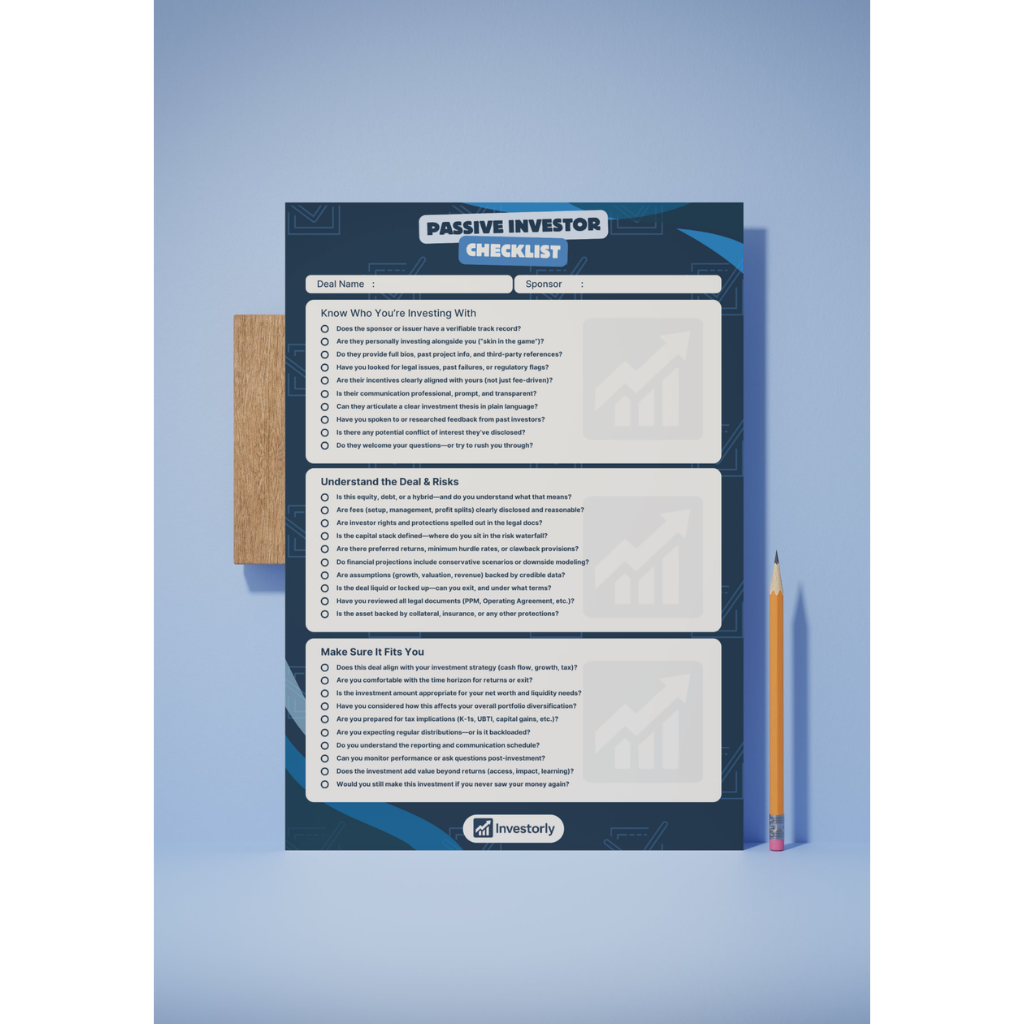
Organize the documents, terms, questions, and information worth reviewing before you commit capital.
View the Checklist